Measuring Emotions: How Psychophysiological Methods Are Reshaping Cosmetic Claims

Euro Cosmetics ·

FRAUNHOFER IVV SERIES · PART 1 OF 3

In this three-part interview series, developed in collaboration with Fraunhofer IVV, we explore key future topics in cosmetics, beginning with psychophysiological measurements for claim substantiation.

Emotional and sensory claims are becoming increasingly important in cosmetics – but how can they be scientifically substantiated? This interview explores how psychophysiological methods can help verify such effects and why they are gaining relevance for both scientific credibility and regulatory confidence.

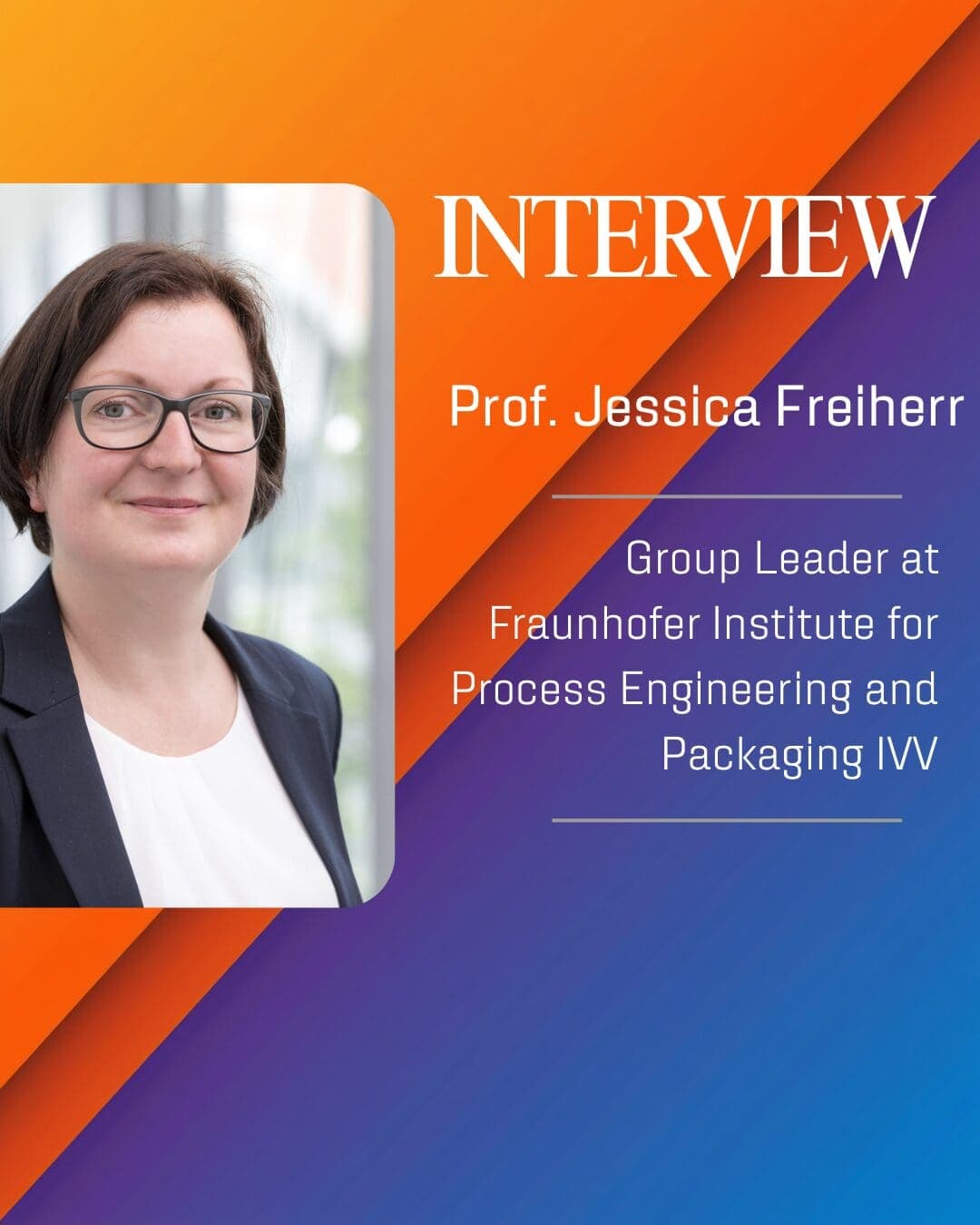
A conversation with Prof. Jessica Freiherr, Group Leader at Fraunhofer Institute for Process Engineering and Packaging IVV

We measure what a person feels, even if they cannot describe it themselves

MARCH 2026

Euro Cosmetics:

Prof. Freiherr, claims related to emotions and sensory perception are becoming increasingly common in cosmetics. Why is psychophysiological claim verification becoming increasingly relevant for the cosmetics industry?

Prof. Jessica Freiherr:

Many cosmetic claims today relate to emotional and sensory effects such as calming, energizing, or soothing. At the same time, both consumers and regulators expect such claims to be clearly substantiated. This is where psychophysiological measurement is becoming increasingly important. Unlike subjective statements alone, these methods allow us to capture physiological reactions that people cannot consciously control, making emotional product experiences objectively measurable. For cosmetics manufacturers, this creates a valuable bridge between consumer perception, scientific evidence, and regulatory confidence.

Euro Cosmetics:

What was the starting point for your research, and what specific problem do you solve for cosmetics manufacturers today?

Prof. Jessica Freiherr:

Our research focuses on psychophysiological measurement methods that enable us to objectively verify cosmetic claims. Subjective data from tests is often insufficient, especially for claims such as soothing, relaxing, or invigorating. We therefore also record physiological reactions – i.e., signals that humans cannot consciously control – and make emotional experiences quantifiable.

Many manufacturers face the same challenge: consumers expect sensory and emotional effects, but these are difficult to prove objectively. We wanted to develop a method that is both scientifically robust and suitable for everyday use by companies.

We enable companies to clearly substantiate claims such as calming, energizing, or soothing – thereby reducing the risk of warnings, strengthening claims, and differentiating themselves in a highly regulated and competitive market.

Euro Cosmetics: What are psychophysiological measurements, and what exactly do you measure? Can you describe the method in more detail?

Prof. Jessica Freiherr:

It involves subconscious physiological reactions such as changes in skin conductance, heart rate, breathing, or subtle changes in facial expressions after use of a cosmetic product. All these parameters show how a product is actually experienced. And sometimes they even contradict what test subjects say verbally – an important indication for the formulation or subsequent claims strategies.

We measure what a person feels, even if they cannot describe it themselves.

Euro Cosmetics: How do your studies differ from traditional consumer tests? Do your measurements replace them?

No, not at all. Consumer tests remain important. They show subjective perceptions. Our measurements complement these results through the collection of data on an objective level. The biggest advantage for companies is that when subjective statements and physiological signals match, the result is a particularly robust, regulatory-strong claim.

Euro Cosmetics: Can you give a specific example?

A classic claim is: “induces a calming effect”. Here, we measure physiological stress indicators, among other things. If skin conductance response decreases or heart rate and breathing regulate themselves after use of a product, this indicates genuine relaxation. If subjective and objective results match, the claim is also credible. Companies who validate such claims before competitors or authorities ask questions gain a competitive advantage.

Euro Cosmetics: What role do data analysis and AI play in your research?

Prof. Jessica Freiherr:

We work with highly complex, multidimensional datasets that link physiological measurements, sensory evaluations, and subjective perceptions. Within a single study we generate amounts of data that are more commonly found in academic research. Artificial intelligence in the form of multivariate analysis and machine learning helps us to evaluate this data efficiently, reveal hidden patterns, and make reliable predictions. For example, we can identify which fragrance measurably triggers a relaxation response, which texture increases the level of activation, or which product feature has been proven to enhance the feel-good or ‘wow’ moment.

However, it is crucial to note that AI does not replace scientific expertise. The models are always based on real human data and are validated and classified by our professional interpretation. AI is a powerful tool for us, but the strategic evaluation, contextualization, and derivation of specific recommendations for action remains a task for experienced scientists.

Euro Cosmetics: What limitations are there and why should cosmetics companies work with Fraunhofer IVV in particular?

Psychophysiological reactions are highly sensitive; they are always contextual. The environment, expectations, product presentation, and target group have a significant influence on the result. Studies must therefore be carefully designed, methodically implemented, and scientifically critically evaluated. Our methods do not replace a content-based claim strategy – but they do provide an objective basis for making claims measurable, reliable, and credible.

Our work is independent, scientifically-based, and tailor-made. Instead of standardized test packages, we develop individual study designs that are precisely tailored to a company’s questions, their products, and strategic objectives.

Our strength is based on in-depth university research, high methodological validity, and reproducible results. At the same time, we have many years of experience working with companies and are very familiar with the requirements for product development, market launch, and claim validation. As an independent research institution, we operate neutrally and data-driven, with a clear focus on reliable results.

Euro Cosmetics: How will the topic of claim verification develop in the coming years?

Prof. Jessica Freiherr:

We are clearly moving toward multimodal validation approaches. Psychophysiological measurement methods, sensory analyses, classic survey methods, and AI-based data analytics are increasingly being integrated and systematically linked. This creates validity and transparency and strengthens brands that want to communicate in a scientifically sound manner.

In addition to the scientific perspective, market mechanisms also play a decisive role. Consumers expect comprehensible, credible statements. At the same time, regulatory pressure is increasing, especially in sensitive areas such as health, sustainability, or efficacy claims. Companies that focus on scientifically sound verification at an early stage not only strengthen their compliance – they also strengthen their brand and reputation.

For manufacturers, this means that claims become more measurable, more transparent, and thus more strategically valuable. Those who start investing systematically in robust verification today will gain a clear competitive advantage tomorrow. In short, validation becomes a competitive advantage and is not just a regulatory obligation.

Euro Cosmetics: And what should manufacturers do now?

Prof. Jessica Freiherr:

Companies should first ask themselves honestly what claims their products communicate today and whether these statements are scientifically substantiated. Equally important is the strategic consideration of where psychophysiological measurements can create a real competitive advantage. In addition, it is worth examining which products or product lines can be specifically strengthened by objective data – whether in marketing, product development, or in a regulatory context.

Fraunhofer IVV supports manufacturers in answering these questions in a structured, efficient, and scientifically sound manner. Our goal is not only to minimize risks, but also to substantiate claims in such a way that they become a real strategic added value for the brand and the market.

Euro Cosmetics: Thank you for sharing these insights with us.

About Prof. Jessica Freiherr:

As Group Leader in the Sensory Analytics and Technologies department at the Fraunhofer Institute for Process Engineering and Packaging IVV, she combines applied research with academic expertise. She also holds a professorship in Neuroscience of Sensory Perception in the Department of Psychiatry at FAU Erlangen-Nuremberg.