
 Bitop AG
Abstract:
Inflammaging, coined by Franceschi et al. (2000), refers to the chronic, low-grade inflammation that increases with age and contributes to age-related diseases. The World Health Organization’s 2015 World Report on Aging and Health highlighted the need for healthy aging strategies, recognizing skin health as a key yet underappreciated factor.

Skin constantly faces external and internal stressors – UV radiation, pollution, and microbes – that drive persistent inflammation. This leads to visible aging signs like wrinkles, rough texture, reduced regeneration, and weakened barrier function.
This article examines key inflammaging mechanisms, including mitochondrial dysfunction, ROS, inflammasome activation, cytokines (IL-1, IL-6, IL-8, TNF-α), MMPs, and SASP.
bitop Ectoin® natural is demonstrated to deliver therapeutic efficacy across major inflammaging mechanisms, establishing its role in next-generation skin longevity solutions. Ectoin® reduces pro-inflammatory cytokine expression, inhibits oxidative stress, and protects cellular structures through its unique hydro-complex mechanism. Clinical studies show significant improvements in skin hydration, barrier repair, and reduced inflammatory markers, establishing Ectoin® as a gold-standard active for prevention, treatment, and repair of inflammaging.


Characteristics of Inflammaging
The five states of inflammaging are as follows: low-grade, controlled, asymptomatic, chronic, and systemic. These response events are characterized by interactions between the cells and factors in the microenvironment and by regulation of the balance between physiological and pathological signaling networks.
In common conditions, inflammatory responses disappear when proinflammatory factors in infection and tissue injuries are eliminated and then change into a highly active and well-regulated balanced state, which is called resolving inflammation.
As the largest organ of the body, skin is continuously exposed to external stressors such as UV radiation, pollutants as well as air particulate matter and human microbiome. The process of inflammaging involves mechanisms of accumulation of senescent cells in different compartments of the skin based on cell types and their association with skin-resident immune cells to describe changes in cutaneous immunity during the aging process.
As global life expectancy continues to rise, we are challenged with maintaining health into old age. One strategy is to target the chronic low-level inflammation associated with aging, termed inflammaging. This is characterized by increased levels of circulating proinflammatory cytokines and a shift toward cellular senescence, changes that are believed to drive many age-associated conditions.
Causes of Inflammaging
According to the research and conclusions, the top four factors listed to be potential causes of inflammaging, contributing towards cell senescence, are:
- Compromised barrier due to stress
- Oxidation
- Cytokines and Interleukins
- Inflammatory cascade

However, out of these factors, cytokines are the topic of focus for research. Currently, cytokines are used as biomarkers of inflammaging as they are indicative of inflammation and play a large role in the regulation of pro- and anti-inflammatory immune regulation.
Cytokines are small proteins secreted by many cell types that are very relevant in the study of aging and longevity. Aging studies show that a healthy balance of pro- and anti-inflammatory cytokine secretion is associated with successful aging, whereas dysregulation of this system results in inflammaging, poor aging phenotypes, and other aging-related diseases.
Currently, levels of TNF-α, IL-6, and IL-1 can be used as inflammatory biomarkers that indicate frailty, altered immune system, functional decline, and mortality associated with inflammaging.
The Threefold Mode of Action of Ectoin® natural against Skin Inflammaging
Ectoin® natural offers comprehensive efficacy through a three-tiered approach: it prevents the initiation of inflammation by shielding cells and stabilizing membranes, treats existing inflammation by downregulating cytokines and oxidative mediators, and promotes repair by restoring barrier function and enhancing skin regeneration.
As Ectoin® natural stabilizes cell membranes and reduces oxidative stress, this leads to inhibition of pro-inflammatory cytokines like IL-1β, IL-6, and TNF-α. Ectoin® also downregulates the NF-κB pathway, a key driver of chronic inflammation, while restoring skin barrier function and enhancing hydration.
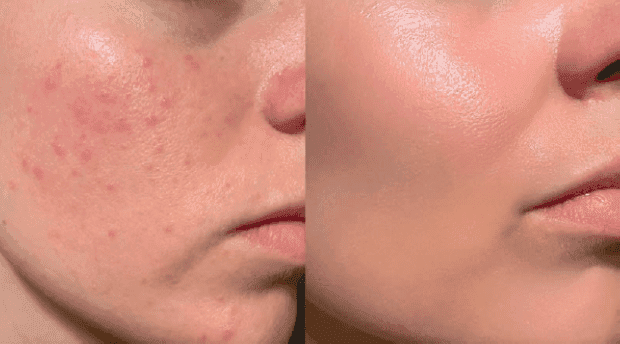
Clinical studies show that topical Ectoin® significantly reduces erythema, roughness, and transepidermal water loss (TEWL). Its dual action – anti-inflammatory and barrier-protective – makes Ectoin® a highly effective bioactive for combating age-related inflammation and maintaining skin health in cosmetic and dermatological applications.
Clinical Evidence
1. Long-Term Skin Barrier Repair and Anti-Inflammatory Efficacy (in vivo)
In a double-blind, randomized, placebo-controlled clinical study, the test products were a cream containing 1% Ectoin® natural, control (0.25% Hydrocortisone “Ebenol® Cream”), and placebo cream.
1% Ectoin® natural reduced the TEWL by 24% and skin redness by 38% after only 7 days of treatment, due to its anti-inflammatory and repairing properties.
The efficacy of 1% Ectoin® natural was equivalent or even better than the results of the treatment with Ebenol®, proving its “Hydrocortisone-like” efficacy.
Furthermore, a recent in vivo clinical study also proved the short-term anti-inflammatory efficacy of Ectoin® natural.
2. Short-Term Skin Barrier Repair and Anti-Inflammatory Efficacy (in vivo)
Single application of 0.5% Ectoin® natural is clinically proven to strengthen the skin barrier within 4 hours, with a reduction of TEWL and skin irritation by 60%.
0.5% Ectoin® natural also demonstrates long-term skin barrier and soothing efficacy up to 48 hours (single application) with a reduction of TEWL by 72%.
3. Downregulation of cytokines, interleukin (IL)-1α, IL-6, IL-8, and TNF-α (in vivo)
The efficacy of Ectoin® in downregulating cytokines, interleukins (IL-1α, IL-6, IL-8, TNF-α) has been proven with two clinical trials: The first clinical trial was conducted on patients suffering from chronic lung inflammation and the second clinical trial was conducted on patients suffering from Chemotherapy-induced Oral Mucositis.
These inflammatory and proinflammatory mediators are key components of the inflammatory cascade, frequently upregulated
Downregulation of cytokines, interleukin (IL)-1α, IL-6, IL-8, and TNF-α (in vivo)
The efficacy of Ectoin® in downregulating cytokines, interleukins and TNF-α has been proven with two clinical trials. The first clinical trial was conducted on patients suffering from chronic lung inflammation and the second clinical trial was conducted on patients suffering from Chemotherapy-induced Oral Mucositis.
These inflammatory and proinflammatory mediators are key components of the inflammatory cascade, frequently upregulated

in response to tissue injury, allergic reactions, and chronic inflammatory conditions.
Both clinical trials demonstrated that Ectoin® downregulates the expression of key inflammatory mediators:
- Interleukin-1 alpha (IL-1α) ↓ 30%
- Interleukin-6 (IL-6) ↓ 50%
- Interleukin-8 (IL-8) ↓ 45%
- Tumor Necrosis Factor alpha (TNF-α) ↓ 40%
Ectoin® effectively modulates inflammatory cytokines and interleukins (TNF-α, IL-1β, IL-6, IL-8), showing excellent efficacy and tolerability for clinical use.
Conclusion
Ectoin® natural presents a powerful, clinically validated solution to combat skin inflammaging by targeting its core mechanisms – cytokine overexpression, oxidative stress, and impaired barrier function.
It demonstrates significant downregulation of key pro-inflammatory cytokines including IL-1α (↓30%), IL-6 (↓50%), IL-8 (↓45%), and TNF-α (↓40%), effectively interrupting chronic low-grade inflammation linked to aging.
In both short- and long-term in vivo studies, Ectoin® improved skin hydration, reduced erythema, and enhanced barrier integrity with efficacy comparable to Hydrocortisone, but with superior safety and tolerability.
Its threefold action – preventing inflammation, treating active flare-ups, and promoting repair – positions Ectoin® as a next-generation bioactive for maintaining skin health, longevity, and resilience against external stressors in both cosmetic and therapeutic applications.
References
- Kennedy, B. K. et al. Geroscience: linking aging to chronic disease. Cell 159, 709–713 (2014).
- Giunta, S. “Is inflammaging an auto[innate]immunity subclinical syndrome?” Immunity and Ageing, vol. 3, article 12 (2006)
- Nathan, C. & Ding, A. “Nonresolving inflammation,” Cell, vol. 140, no. 6, pp. 871–882 (2010)
- Tauber, A. I. Timeline: Metchnikoff and the phagocytosis theory. Nat. Rev. Mol. Cell Biol. 4, 897–901 (2003).
- Gregor, M. F. & Hotamisligil, G. S. Inflammatory mechanisms in obesity. Annu. Rev. Immunol. 29, 415–445 (2011).
- Hotamisligil, G. S. & Erbay, E. Nutrient sensing and inflammation in metabolic diseases. Nat. Rev. Immunol. 8, 923–934 (2008).
- Hotamisligil, G. S. Inflammation, metaflammation and immunometabolic disorders. Nature 542, 177–185 (2017).
- Navarrete, A., van Schaik, C. P. & Isler, K. Energetics and the evolution of human brain size. Nature 480, 91–93 (2011).
- Vescovini, R. et al. Naïve and memory CD8 T cell pool homeostasis in advanced aging. Age (Dordr.) 36, 625–640 (2014).
- Huang, S. et al. Saturated fatty acids activate TLR-mediated proinflammatory signaling pathways. J. Lipid Res. 53, 2002–2013 (2012).
- Butcher, S. K. & Lord, J. M. “Stress responses and innate immunity: aging as a contributory factor.” Aging Cell, vol. 3, no. 4, pp. 151–160 (2004).
- Buommino E, Schiraldi C, Baroni A, Paoletti I, Lamberti M, De Rosa M, Tufano MA. Ectoine from halophilic microorganisms induces the expression of hsp70 and hsp70B’ in human keratinocytes modulating the proinflammatory response. Cell Stress Chaperones. 2005 Autumn;10(3):197-203.