

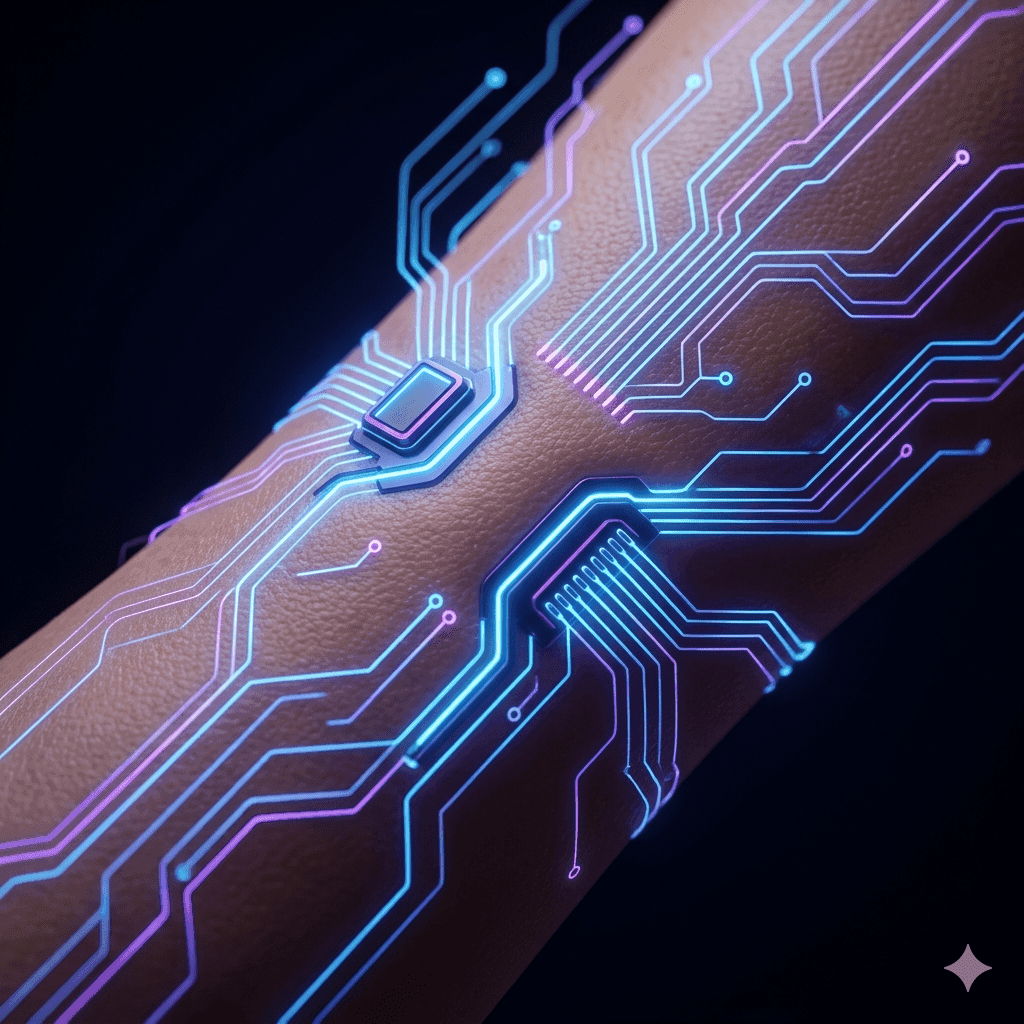

There was a time when beauty was essentially intuitive: consumers chose products based on recommendations, texture, or promises. Then came the era of evidence-based dermocosmetics. Now, the industry is entering a new stage — the maturity of electronic senses. Optical, biophysical, and environmental sensors, integrated with artificial intelligence, have left the laboratory and are now installed in smartphones, smart mirrors, and home devices. Skin and hair are no longer just observed — they are quantified, modelled, and interpreted in real time.
Electronic Senses Transform Cosmetic Evaluation
Electronic sensors are transforming the cosmetic experience by enabling the objective and quantifiable evaluation of skin and hair variables. By integrating optical and biophysical sensors with AI algorithms, these technologies convert physiological signals into measurable parameters such as hydration, pigmentation, wrinkles, and hair damage. Based on this data, they generate personalised, evidence-based recommendations — optimising the selection, combination, and frequency of cosmetic product use.
E-Tongues: From Food Science to Cosmetics
The electronic tongue has demonstrated significant advances in simulating the sense of taste, initially used in the food industry and now expanding into pharmaceutical and cosmetic quality analysis. Recent research describes the use of electronic tongues for flavour masking using electrochemical, potentiometric, and voltammetric sensors, combined with AI to optimise predictive models. This technology shows particular potential for evaluating lipstick formulations using potentiometric sensors and for analysing sensory profiles of skincare products. The HITS (Hydrogel In-Tape Sensor) system, which employs impedance spectroscopy, represents one of the most recent advances — enabling high-speed analysis with sustainable PET materials.
E-Noses: Detecting Skin and Scalp Health
Smart noses, first proposed by Persuad and Dodd in 1982, are systems designed to mimic human olfactory functions. Modern e-nose applications range from search and rescue operations to cancer detection. A promising cosmetics application involves assessing skin and scalp health through portable e-nose systems. By measuring molecules in the skin volatilome — volatile organic compounds from metabolic processes and microbiome activity — correlations can be made to address oxidative stress. Similarly, detecting propionic acid, butyric acid, or specific aldehydes on the scalp can indicate Malassezia presence or inflammation, enabling tailored care solutions. This evolution of digital sensing in cosmetics builds on the broader trend of integrating technology with beauty experiences.
Digital Phenotyping and Digital Twins
Digital phenotyping enables continuous, moment-by-moment quantification of the human phenotype using data from smartphones, wearables, and sensors. In cosmetics, mobile devices now estimate skin metrics such as hydration, texture, and TEWL from selfies using computer vision models. Meanwhile, digital twins represent a growing trend where brands build complete digital avatars of the skin — integrating longitudinal data to allow users to simulate the effects of treatments before real-life application.
Artificial Vision and Phygital Perfumes
Augmented reality tools and AI-powered smart mirrors capable of analysing skin in real time are enriching every beauty experience. Virtual try-on tools for makeup represent one of the fastest-growing applications of computer vision. Research is also underway to integrate the sense of smell into immersive virtual reality — opening new possibilities for the fragrance industry. What was once science fiction — as depicted in films like Minority Report and Her — is now materialising in skin diagnoses, AR makeup simulations, and skincare recommendations that integrate climate, lifestyle, and biometric data.
The new beauty is ceasing to be static and is becoming a continuous dialogue between biology and algorithm.
By Sebastián Silva, Luisa Garnica, Diego Cubillos, John Jiménez — Research, Development and Innovation, Belcorp Colombia.